Channel partners are being asked to do a lot. They need to understand your brand, navigate your technology, make smart marketing decisions, keep up with changing programs and processes, and turn all of that into action in their local markets, all while running their own businesses.
That reality is changing how we think about channel partner training. The question is no longer simply, “Have we trained our partners?” A better question is: “Are our partners ready to do what we’re asking them to do?”
Channel readiness is what happens when partners have the knowledge, confidence, tools, and support to take action when it matters. The key to cultivating this channel readiness is knowing the best ways to empower your partners through continuous channel learning.
Key trends in channel partner training and readiness
Most channel partners aren’t looking for more training. They’re looking for help, and they expect to find it when and where they need it.
Several shifts are shaping how brands approach partner learning and enablement:
- Continuous learning is replacing one-and-done training. Partners need reinforcement as programs, platforms, products, and expectations evolve.
- Self-service is becoming an expectation. Partners want to find answers and resources without always attending a webinar, submitting a ticket, or asking for help.
- Learning is moving closer to the work. Guidance is increasingly embedded into the platforms and processes where partners are already working.
- One size doesn’t fit all. Partner experience, marketing sophistication, available time, and learning preferences can vary dramatically across a network.
- AI is creating new possibilities. Search, recommendations, practice, coaching, and personalized support can help partners get to the right information faster.
- Measurement is shifting toward performance. Course completions tell us whether someone finished training, not necessarily whether they’re ready to act.
The future of partner learning isn’t more content — it’s better access to the right support at the right moment.
Channel learning and enablement best practices
So, what does channel partner training look like in practice? Here’s how to structure your channel learning programs, so partners keep coming back for more.
1. Move from “just in case” to “just in time”
Traditional channel partner training often operates on a “just in case” model: Here’s everything you might need to know before you get started.
Foundational learning still matters. But partners also need support at the moment they’re trying to accomplish something. That’s learning in the flow of work.
A partner submitting a co-op claim may not need a 30-minute course explaining the entire program. They may need a 90-second video showing them how to submit the claim correctly, embedded directly on the claim page.
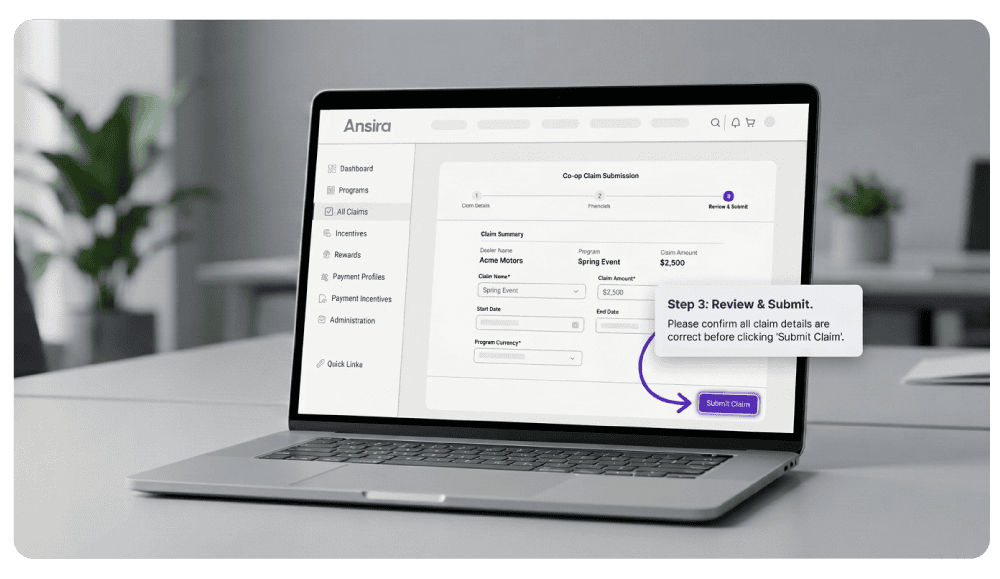
Reducing the distance between “I need help” and “I know what to do next” improves learning while also removing friction from the partner experience.
2. Meet partners where they are
Within the same channel marketing network, you may have sophisticated marketers with dedicated teams and partners who are effectively acting as the entire marketing department themselves.
Their learning shouldn’t look exactly the same.
A strong channel readiness strategy gives partners multiple ways to succeed. Short how-to videos, job aids, in-platform guidance, searchable resources, instructor-led learning, office hours, peer learning, and opportunities to build muscle memory give partners the right level of support based on what they’re trying to accomplish.
3. Balance self-service with human connection
As self-service becomes more important, it can be tempting to simply digitize everything.
But some learning benefits from conversation.
Complex concepts, strategic decisions, practice, and behavior change are often more effective when partners can ask questions, hear from peers, and receive feedback.
Use high-touch experiences where interaction adds value. Use self-service where speed and convenience add value. The strongest strategies intentionally blend the two.
4. Design around friction
Partner feedback, support tickets, platform analytics, search behavior, and conversations with partner-facing teams can tell us where partners are getting stuck. Look for patterns:
- What questions keep coming up?
- Where are partners abandoning a process?
- Which tools aren’t being adopted?
- Where do they lack confidence?
Those moments of friction are often learning opportunities.
5. Measure what partners do — not just what they complete
Registrations, completions, resource utilization, and engagement can tell us whether partners are interacting with channel learning. But ultimately, we want to know whether training and enablement change what partners can do.
That might mean measuring platform adoption, campaigns launched, fund utilization, support volume, time to complete key activities, errors or resubmissions, partner confidence, or marketing performance.
A useful place to start is one simple question:
“What should partners be able to do better, faster, or more confidently because this learning exists?”
Start there, then work backward to the learning experience and metrics that matter.
Readiness is an ecosystem, not a course catalog
Perhaps the biggest opportunity is to stop thinking about channel learning as a collection of channel partner training assets.
Partners experience moments:
- The first time they log in.
- The first campaign they build.
- The moment they can’t find an answer.
- The webinar where they hear from a peer.
- The video they find exactly when they need it.
- The person they call when the answer isn’t obvious.
Each of those moments contributes to channel readiness. The strongest partner ecosystems give people the ability to learn, find, practice, ask, and act. As you think about your own channel, consider:
- Can partners find what they need at the moment they need it?
- Are we designing learning around their work or around the content we want to deliver? Where does human interaction add value?
- Where could self-service remove friction?
- Are we measuring learning activity or partner readiness?
Those are the questions changing the conversation around channel learning and the ones worth exploring as we think about what’s next.
Maximize channel readiness across your network with Ansira
Want to empower your partners with a channel learning program but don’t know where to start? Let the marketing experts at Ansira support your partners with personalized support. Learn more about channel learning and enablement services through AnsiraX.
Curious to learn even more about channel partner training? Explore how Ansira empowers clients and partners through eLearning, how-to content, and customized training portals to build confidence, increase adoption, and accelerate performance.