Compliance has always been an essential element of channel marketing, and with the introduction and widespread implementation of AI across the industry, it’s become even more pressing.
AI use brings clear advantages for your brand — but it also presents major compliance risks, from privacy concerns to brand inconsistencies to factual inaccuracies.
You shouldn’t have to choose between AI innovation and compliant marketing. By taking the right compliant AI measures, you can ensure every marketing campaign adheres to regulatory and brand standards.
What is AI compliance in marketing?
AI compliance is the process by which organizations ensure their AI systems and processes adhere to all legal, regulatory, ethical, and industry standards. Compliant AI use protects both consumers and the brands that sell to them, safeguarding customers from data privacy violations while minimizing the risk of marketing inconsistencies and legal consequences for brands.
There are six core elements of AI marketing compliance that brands and their channel partners must consider when leveraging AI tools:
- Data privacy: All personal data collected and used by AI tools must be secured to maintain consumer privacy.
- Transparency: Always disclose to consumers when AI is being used, especially when collecting customer data or directly interacting with a customer through a chatbot.
- Explainability: Brands should be able to identify and understand the reasoning their AI tools use when producing outputs.
- Bias mitigation: Minimize unfair biases and discriminatory language that AI could inadvertently produce.
- Legal and regulatory standards: Compliant AI use follows all applicable laws and regulations, such as ISO standards.
- Accountability: Brands must establish clear accountability and oversight for their AI systems to ensure any improper AI use can be quickly corrected.
Why is compliant AI important in channel marketing?
AI marketing compliance ensures numerous protections for brands, channel partners, and consumers, including:
- Maintaining brand integrity: By combining AI and compliance, you can ensure that marketing assets are consistent with your brand messaging and imagery across your partner network.
- Minimizing legal risks: Adhering to AI compliance standards reduces the risk of legal repercussions like fines and other costly penalties.
- Avoiding errors and biases: AI can hallucinate inaccurate information and even deliver biased or discriminatory outputs. Proper AI marketing compliance minimizes these risks.
- Protecting customer data: Compliant AI ensures that customer data is secure and protected.
- Gaining a competitive advantage: According to Gartner, compliance violations cost organizations $4.4 billion in 2025 alone. So, while 94% of companies use AI globally, many of them haven’t yet mastered compliance, giving organizations that leverage compliant AI a competitive advantage.
- Maintaining customer trust: Many consumers are skeptical of AI, with 65% of Americans stating that it’s poorly regulated. Brands that prioritize AI marketing compliance can gain consumers’ trust by making genuine efforts to practice ethical AI use.
How to balance AI and compliance in your marketing
Maintaining AI marketing compliance requires taking intentional measures to ensure responsible AI use across your channel network. There are eight key things you should do to cultivate compliant AI in your organization.
1. Create an AI governance framework
Most organizations that commit AI noncompliance don’t know they’re using these tools improperly. When you create guidelines and policies that clearly define how AI should and shouldn’t be used in your marketing, your team members, channel partners, and stakeholders will have a better understanding of responsible and compliant AI use.
When creating your AI governance framework, it’s important to leave no stone unturned. That means defining:
- Appropriate and inappropriate use cases
- Approved and prohibited AI tools
- What data is safe and unsafe to feed to AI
- Compliance review processes
- Ethical guidelines
- Repercussions for noncompliance
2. Build human oversight into the process
AI can make mistakes — no matter how sophisticated your tools are. That’s why AI should never be used completely unchecked. That means building human oversight into every marketing process that leverages AI.
When you assign humans to review and approve AI-generated marketing, you ensure any errors or inaccuracies are identified and eliminated before materials go to market. Otherwise, you risk leaving behind offensive biases, off-brand messaging, and even false information.

For example, say you’re in the healthcare industry, and one of your local providers uses AI to generate a blog about flu prevention tactics. However, the AI hallucinates some of the information and suggests to readers that drinking hand sanitizer can help clean out germs in their systems. Not only is this statement inaccurate, but it’s also dangerous.
Building human intervention into your AI compliance processes helps catch and correct these types of mistakes before they negatively impact your customers and your brand.
3. Limit the role of AI
While marketing AI is great for streamlining workflows and cutting down repetitive manual processes, you shouldn’t use it to take over all your most important tasks. You can improve AI marketing compliance and reduce risks by limiting the role of AI to repetitive, low-value tasks rather than strategic decision-making and execution.
For example, you can use AI to process and interpret complex datasets, but your team should be the ones deriving insights and strategies from this data.
4. Provide AI training to partners
Creating AI compliance rules is one thing — putting them into action is another. Teams and partners often require hands-on training to reinforce responsible AI use. Provide regular education through online training courses, videos, and live presentations to show your AI governance standards in action.
5. Ensure transparency with AI use
Of course, it’s necessary to disclose AI to customers who interact with your AI systems. However, compliant AI also requires transparency within your AI systems themselves.
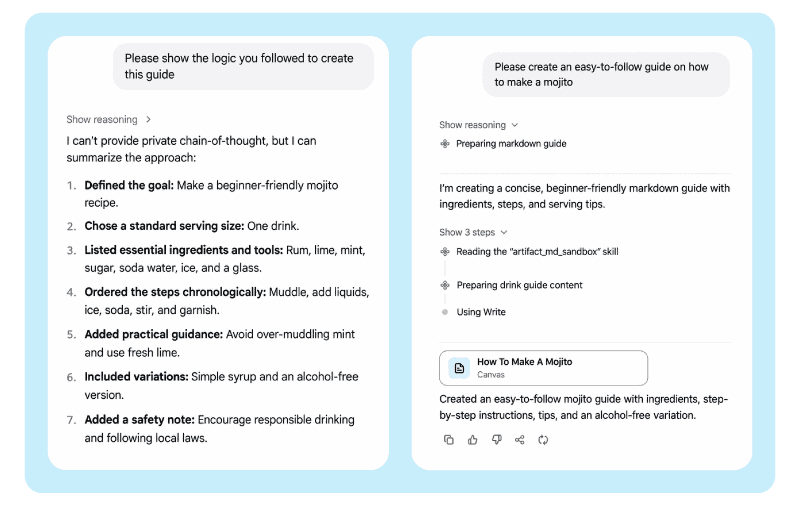
In other words, you should have clear insight into how your AI tools make decisions. That means when AI produces a blog, for example, you should be able to see the reasoning behind each step it took to write that blog. This level of transparency helps you better understand the logic behind AI outputs while also making it easier to identify potentially biased thinking.
6. Stay current on changing AI regulations
As AI continues to evolve, regulations evolve with it. That’s why it’s important to stay up to date with changing AI standards to ensure your brand and partners continue to maintain AI marketing compliance.
Consider subscribing to relevant industry publications and regulatory bodies so you’ll be the first to know when a new AI regulation is developed.
7. Regularly audit your AI processes
Audit your AI workflows regularly to ensure what’s working now continues to work for your brand in the future. Over time, you may find that you need to retrain your AI systems, refine processes, or update governance policies to improve AI compliance and performance. Periodic audits will help you keep up with innovations and optimizations over time.
8. Offer brand-approved AI compliance tools
As AI use grows, so does the risk of partners using shadow AI tools in their marketing. Shadow AI refers to unauthorized AI tools used in an organization without that organization’s approval. Naturally, ungoverned AI use brings about major compliance risks.
Guide your partners and teams away from the wrong AI tools by providing them with one that already has your stamp of approval. When you introduce a brand-approved AI compliance tool to your channel network, you minimize the risk of them seeking out their own unvetted solutions.
Ensure AI marketing compliance with Ansira’s AI-powered platform
Leverage compliant AI innovation paired with human expertise with Ansira, an ISO/IEC 42001:2023-certified organization. Our AI-powered brand-to-local marketing platform is designed to drive efficiency at scale while ensuring brand and legal compliance across your partner network.
Interested in tracing the steps it takes to become an AI-first organization? Learn more about Ansira’s AI transformation.