
A steady stream of leads doesn’t always mean a pipeline full of real opportunities. Bot traffic, out-of-area submissions, and weak intent can drain media budgets and slow down follow-up. But with an optimized lead management process, you catch issues early and help the right prospects reach your team.
These practical tactics can help you reduce spam, improve lead quality, and make smarter optimization decisions without losing sight of scale.
Monitor lead capture
Policing the lead capture process is a great way to detect and shut down bad traffic early on. Your submissions should follow a controlled path from the moment they’re captured to determine whether or not delivery is safe.
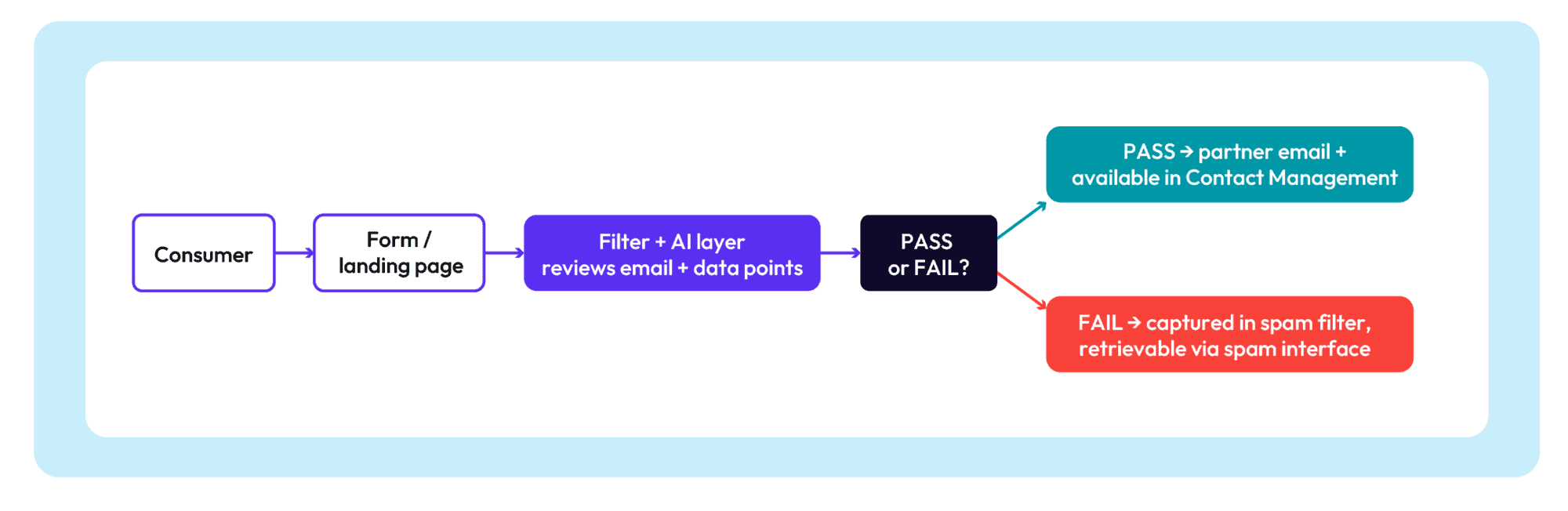
When a form is filled out, clean leads move forward and are delivered to local partners, while leads that raise questions are intercepted and rerouted to an internal inbox for manual review. By carefully monitoring the lead capture process, you cultivate cleaner, higher-quality leads while withholding spam — and ensuring true leads caught by your filters end up in client CRMs.
Use media controls to minimize low-quality traffic
Take advantage of media settings in your lead management process to minimize low-quality traffic and out-of-area leads before they reach your forms. There is a wide range of controls you can leverage and adjust to better observe lead quality signals, such as location, inventory, and audience-expansion controls. Google and Meta are particularly good at this, offering the following settings to safeguard your forms from bad traffic.
When using Google, you can set your location targeting to “Presence” to ensure it only targets consumers within your physical location. You can also add state exclusions to ensure leads remain in-state across your campaigns.
If you use Meta, you can disable “Audience Network” to cut off low-quality lead placements. By carefully managing audience expansion within Meta, you can better align lead delivery to your target audience.
Manage your lead handling process
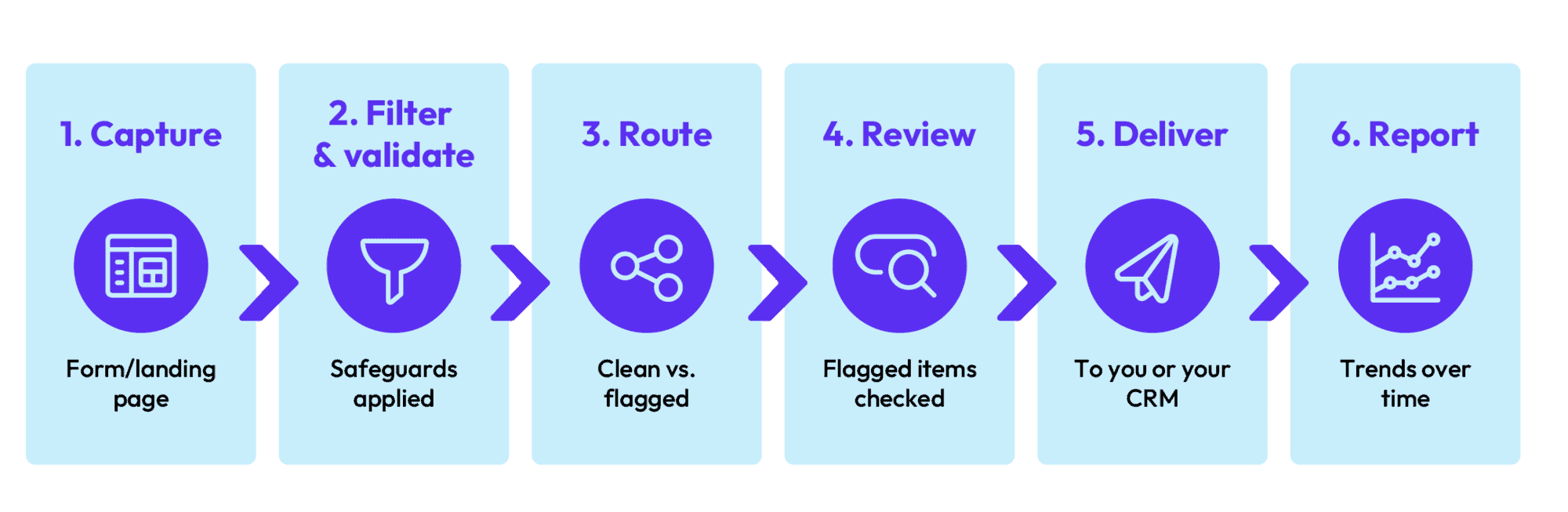
Optimize your lead handling process with a monitored, six-step approach:
- Capture the lead from a landing page or form.
- Filter and validate the lead with applied safeguards.
- Route clean leads and flag suspicious ones.
- Review all flagged items.
- Deliver clean leads to your CRM.
- Report trends over time.
This process ensures lead quality while creating accountability across the lifecycle by improving clean lead delivery, minimizing spam, and tracking trends and duplicate patterns regularly.
Leverage user intent and experience
Lead quality doesn’t just depend on targeting alone. The following elements are crucial for generating valuable leads, working together to increase quality:
- User intent: Search queries and engagement are the strongest predictors of quality.
- Creative and messaging: Relevant ads attract more qualified prospects.
- Landing page experience: Clear, relevant pages convert interest into action.
- Continuous optimization: Algorithms refine delivery by learning from outcomes.
Be mindful that more specific targeting doesn’t necessarily mean higher-quality leads. Getting too granular with your targeting can reduce scale without improving results. That’s why it’s vital to evaluate trends every four to eight weeks to better inform your targeting decisions.
Refine lead quality data
Regularly assessing lead quality data in your lead management process provides insights to help you continuously optimize audiences, bids, objectives, keywords, and geographies. By evaluating this data, teams can better diagnose low-quality sources, adjust targeting, and re-analyze quality and scale.
Here are some actions you can take to refine your lead capture strategy:
- Leverage negative keyword lists: Update negative keywords, add winners, and exclude irrelevant terms regularly to avoid pouring budget into ineffective tactics.
- Apply exclusions: If an audience segment produces low-quality leads, implement an audience or placement exclusion.
- Pivot as needed: Don’t be afraid to alter your objectives and try different channels if your original strategy isn’t performing.
- Optimize bids and geo levers: Leverage bid adjustments, ZIP refinements, and dayparting wherever relevant.
It’s important to note that more effective targeting comes with a tradeoff — while you’ll receive higher-quality leads, you can also expect lower lead volume and increased cost-per-lead.
Use a feedback loop to inform future media decisions
Implement a feedback loop that leverages meaningful website actions, such as tagged clicks, calls, directions, and form submits, to inform future media decisions. These actions convert media response into signals for smarter optimization.
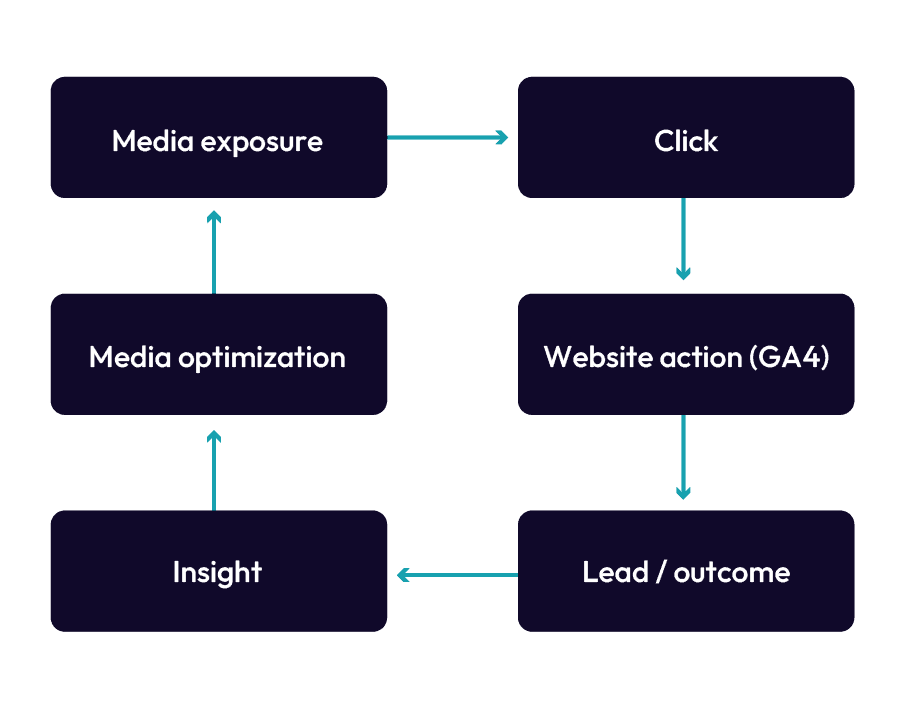
Here’s how it works:
- Media tags capture downstream website actions like form submits, calls, get-directions, and inventory views.
- Media pixel-action signals targeting, bidding, creative, and budget decisions.
- High-value actions build remarketing audiences and sharpen future targeting.
Set a cadence to review performance and lead quality
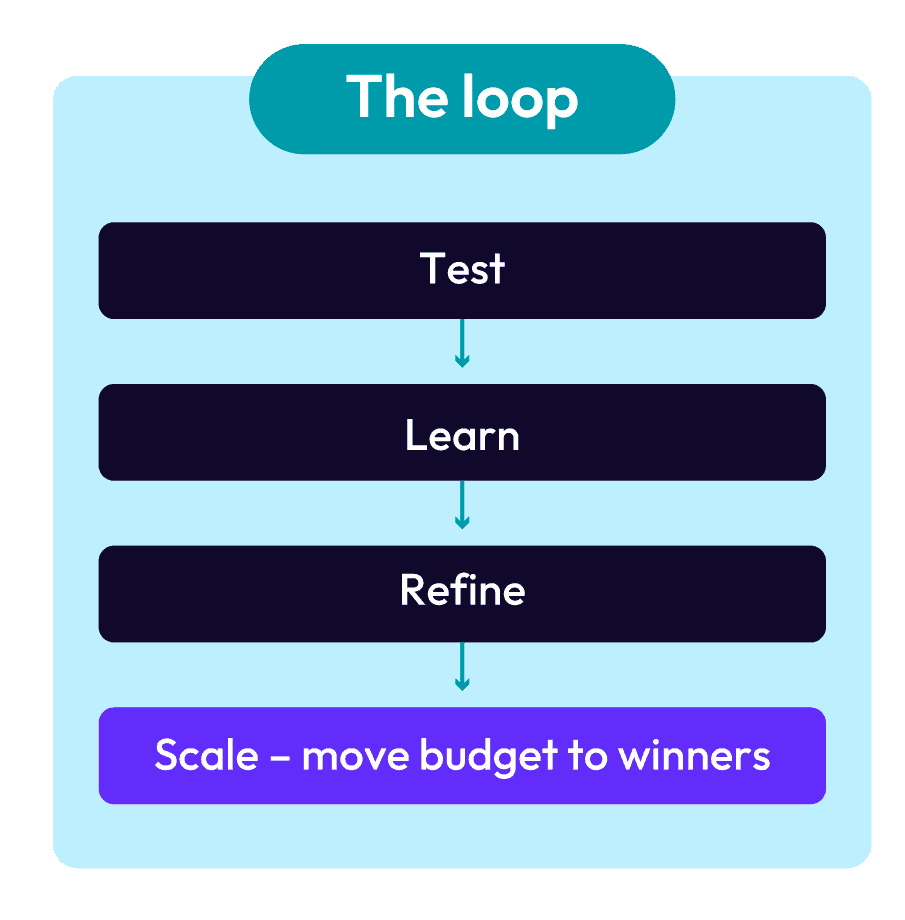
Set an optimization cadence to ensure your teams test, learn, refine, and scale as performance signals accumulate:
- In real time: AI and platform algorithms optimize continuously.
- Daily and weekly: Team evaluations convert readouts into optimizations.
- Monthly and quarterly: Insights roll into strategy and budget shifts.
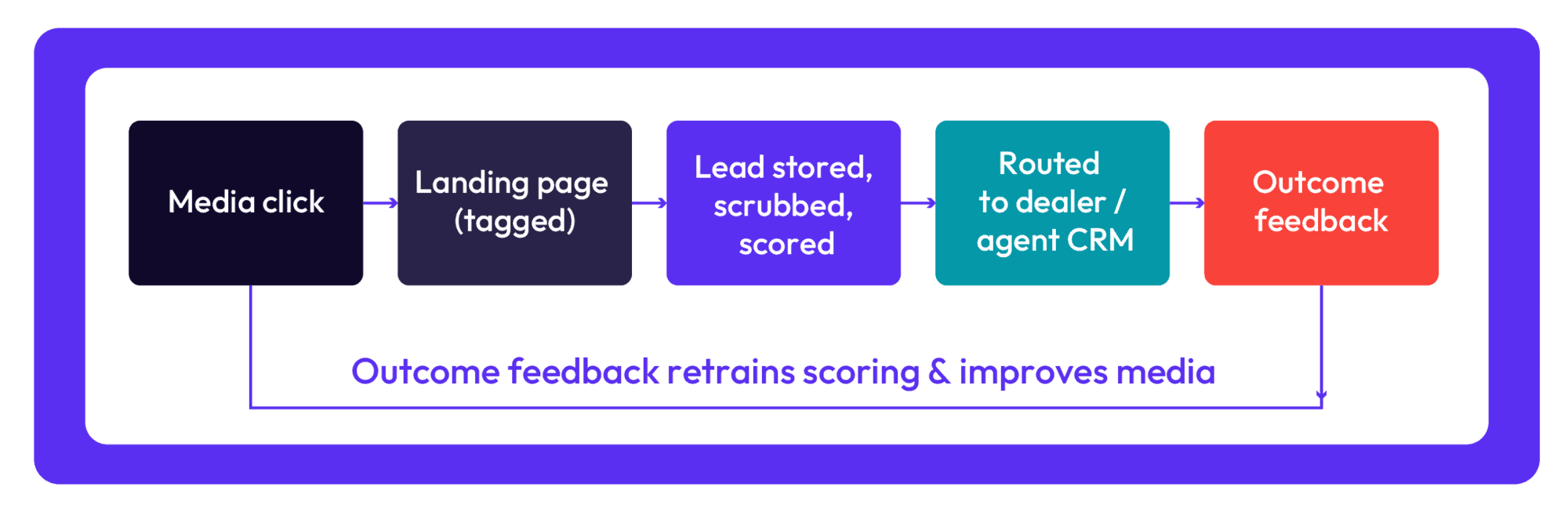
Utilize closed-loop data from your CRM
Use closed-loop analytics from your customer relationship management (CRM) software to connect media activity to lead quality through lead scoring. This means rating leads based on intent signals like:
- Engagement
- Geography
- Campaign source
- Form detail
- Downstream conversions
When you assign scores to your leads, you can better determine which media tactics drive the highest-quality leads and prioritize follow-up accordingly. By connecting these downstream outcomes, you can better prove ROI and optimize future targeting.
Attract high-quality leads with Ansira
Simplify lead management and attract stronger prospects throughout your partner network with Ansira. Get in touch to learn more.