
In complex sales and marketing networks, growth is becoming harder to unlock. Channels are multiplying, buying journeys are changing, and brands are increasingly dependent on vast ecosystems of partners to reach and convert customers.
Many organizations respond by layering on more tools, more vendors, and more processes. While these tech stacks may look cutting-edge on paper, they actually obscure performance, create inefficiencies, and leave money on the table.
The impact shows up directly in performance. Forrester Consulting conducted a study commissioned by Ansira that surveyed 322 U.S. marketing leaders responsible for partner strategy at their organization to uncover how they are currently managing their partner ecosystems, the tools they rely on, and the challenges they face.
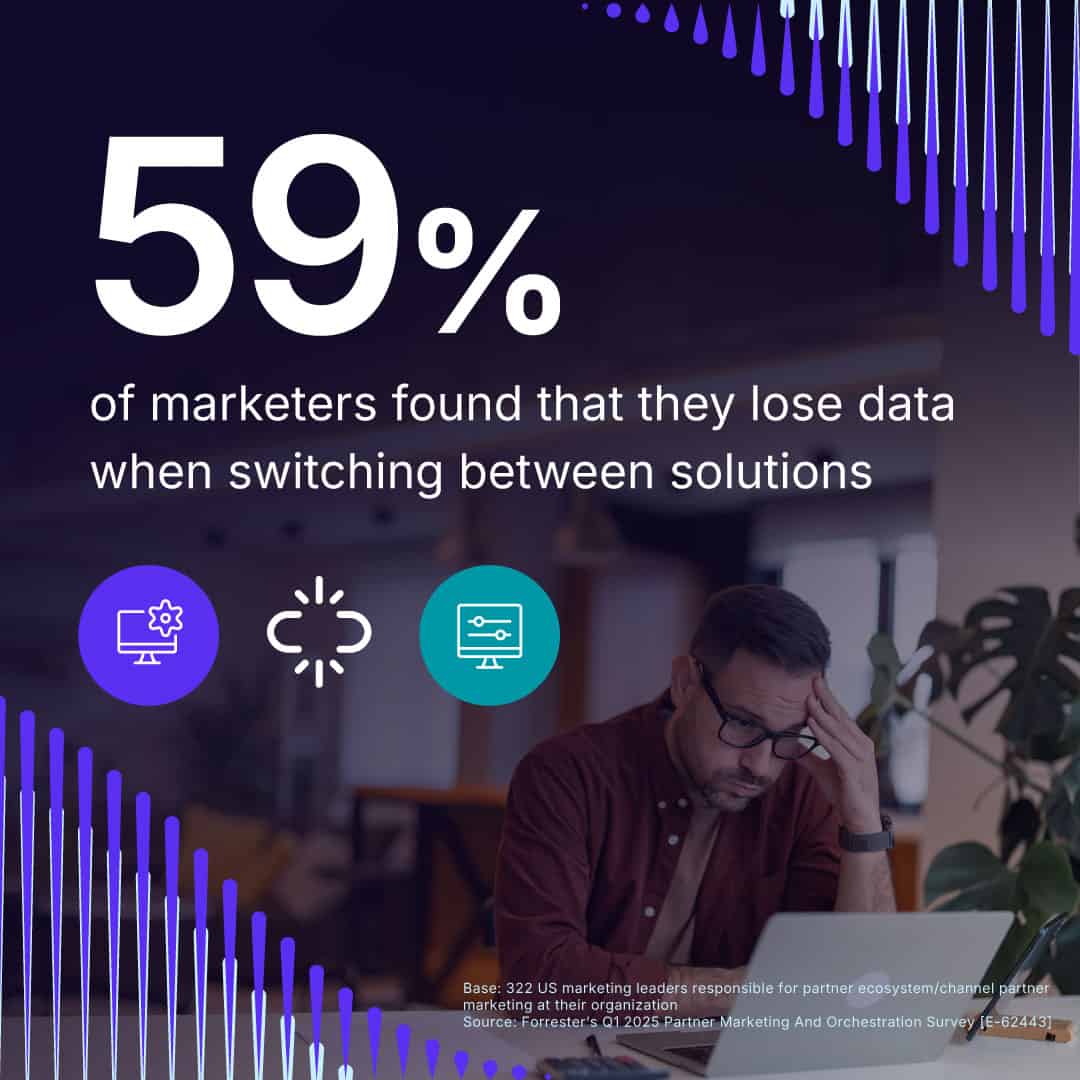
Respondents said they turn to at least six tools, on average, to manage and orchestrate their partner ecosystem and 59% said they experience data loss when switching between tools. At the same time, billons of local marketing dollars are underutilized or unused entirely.
The key to growth for brand-to-local ecosystems isn’t having the longest list of tools. The companies who succeed will be the ones that synchronize their brand, partners, funding, and local execution in one unified platform – aligning data, decisions, and dollars to drive measurable revenue outcomes.
The true cost of disconnected tools
For C-suite leaders, the question is no longer whether your brand-to-local ecosystem is fragmented. It’s how much value you’re losing because of it.
Fragmentation creates friction at every step. With disconnected tools, brands spend valuable time on manual processes like consolidating data and matching partner records across systems. That’s time your team could be focusing on shaping strategy, improving programs, or enabling partners. Local partners are also impacted by having to switch between multiple platforms to find the resources they need to show up in their local markets.
As a result, brands see consequences that go beyond just inefficiency. According to the Forrester Consulting study, marketers noted significant consequences of ineffective partner orchestration including loss of competitive edge, legal and compliance risks, increased time to market, decreased customer retention, reduced revenue, increased partner turnover, and loss of data between solutions. Nearly 60% of respondents said they face at least three of these consequences.
With multiple vendors and platforms, enforcing consistent rules for co-op, MDF, branding, and compliance also becomes a challenge. Ecosystems with multiple point solutions often struggle with disconnected workflows, limited visibility into how funds are used at the local level, and gaps in record-keeping.
Marketing dollars are often the biggest revenue leak
Few areas illustrate the downside of point solutions more clearly than co-op and local marketing dollars. Co-op and marketing development funds (MDF) are among the largest, least optimized investments for many brands operating in complex sales and marketing networks.
According to Ansira Aggregate Data, an estimated $70 billion is allocated to local partners each year. Most brands see only about 50% co-op utilization, meaning half of that investment goes unused.
To put that into even greater perspective: every 1% increase in co-op utilization equates to 7% more leads. This small percentage gain in utilization represent meaningful revenue shifts.
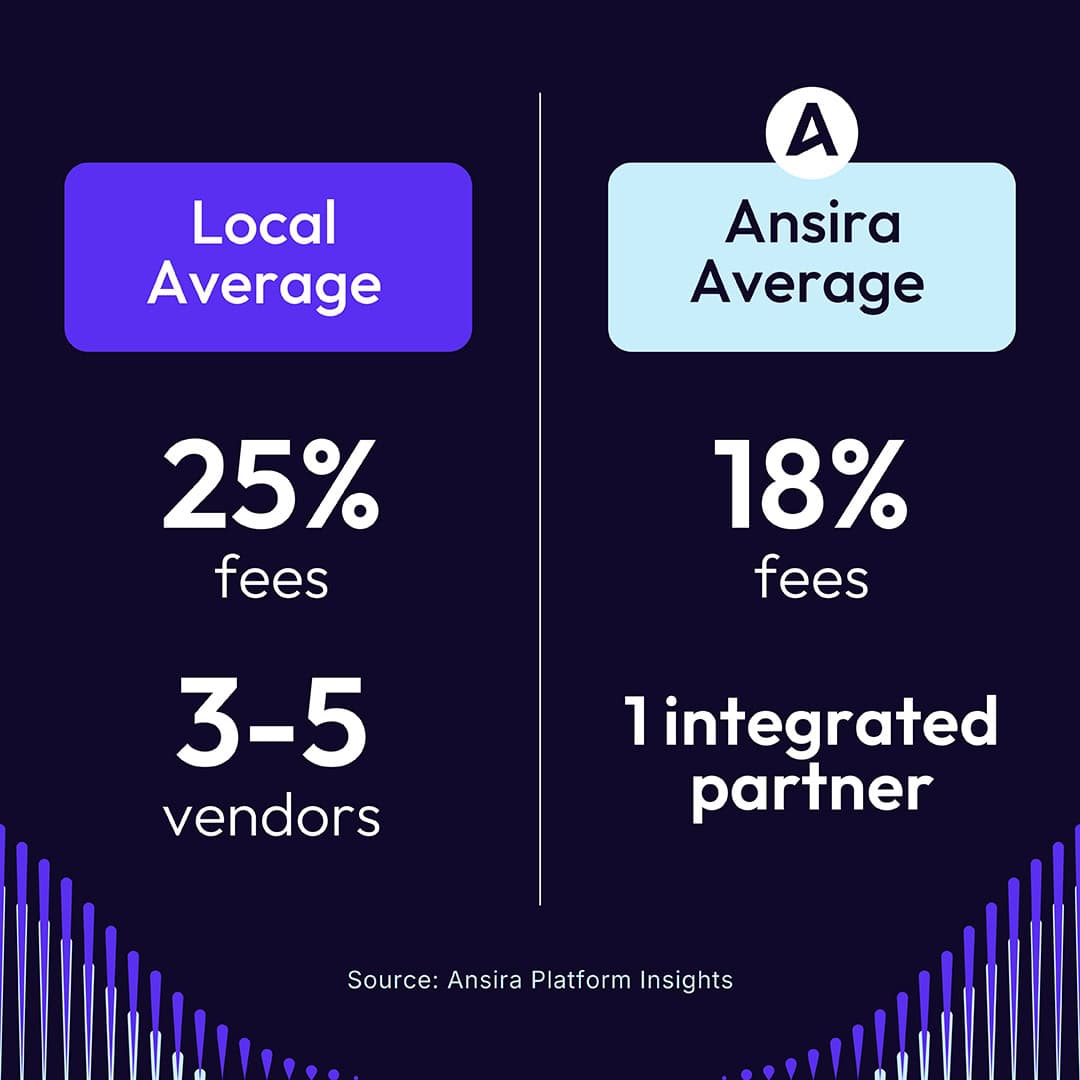
When brands rely on an average of six different vendors to power their ecosystems, the cracks multiply. Partners are forced to navigate different interfaces, rules, and workflows. Co-op and MDF program guidelines and approvals sit in one system while campaigns and local execution live in another. Fees also begin to stack up across vendors, with brands incurring on average about 25% in fees to just orchestrate complexity.
The result is predictable: partners disengage, funds go unused, and the brand loses both growth and visibility.
Driving revenue through a unified platform
The future of brand-to-local ecosystems isn’t adding more technology. It’s about orchestrating the entire ecosystem – technology, data, partners, and services – as one.
With a unified platform like Ansira, the brand-to-local ecosystem runs through one connected system that brings together every aspect of channel partner marketing including incentive and fund management, dynamic content, localized campaigns and activation, along with analytics and insights.
By consolidating these critical components, brands can turn operational efficiency into a competitive advantage.
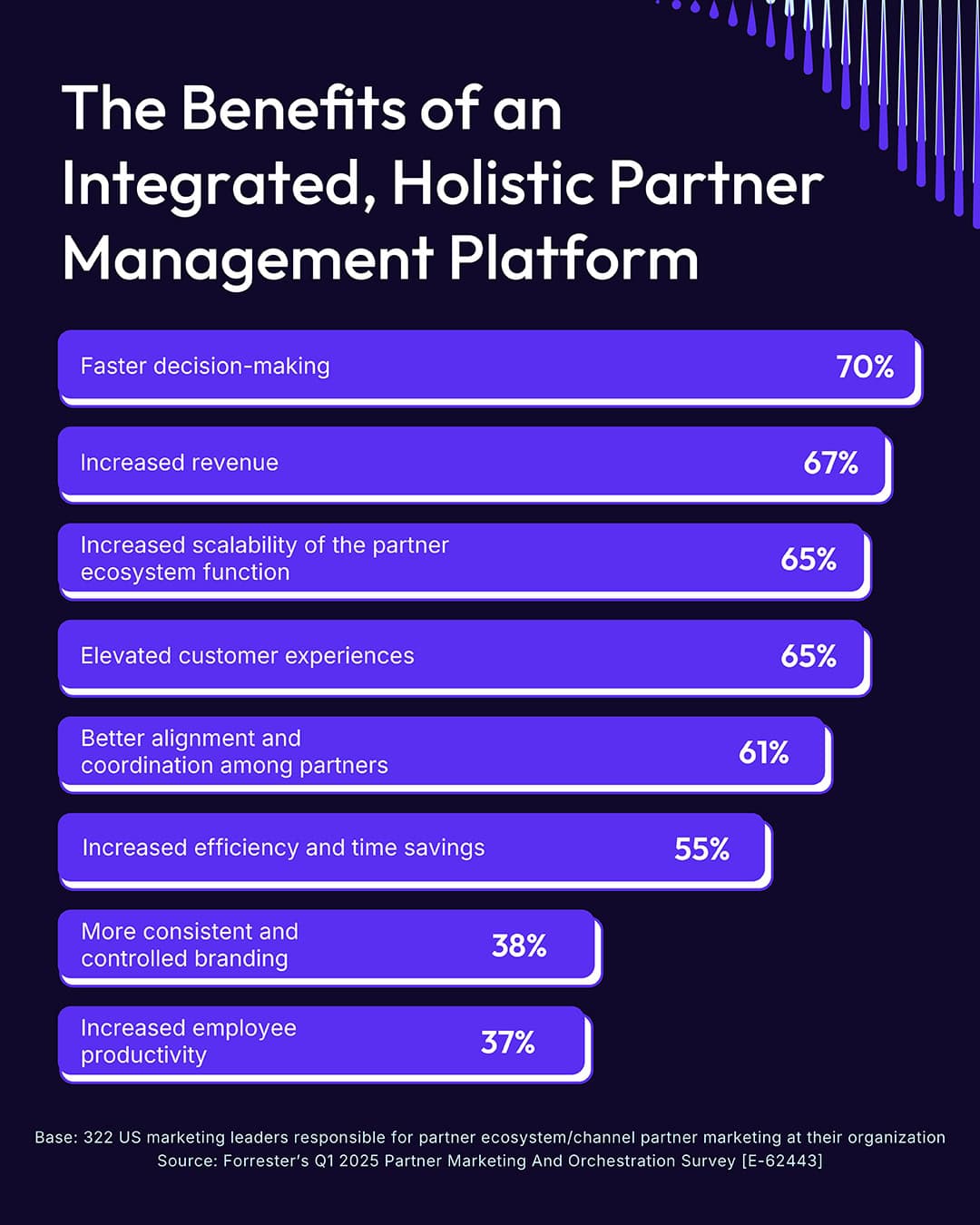
When asked what the benefits of an integrated, holistic partner management platform would provide, respondents of the study conducted by Forrester Consulting said faster decision making, increased revenue, increased scalability of the partner ecosystem function, and elevated customer experiences, among others.
The most effective ecosystems pair a unified platform with consultancy and services designed to drive even greater value. In practice, this means working alongside brands and partners to design programs that drive partner adoption and measurable performance, optimize tactics and investments based on real-time data, and translate complex ecosystems into clear KPIs.
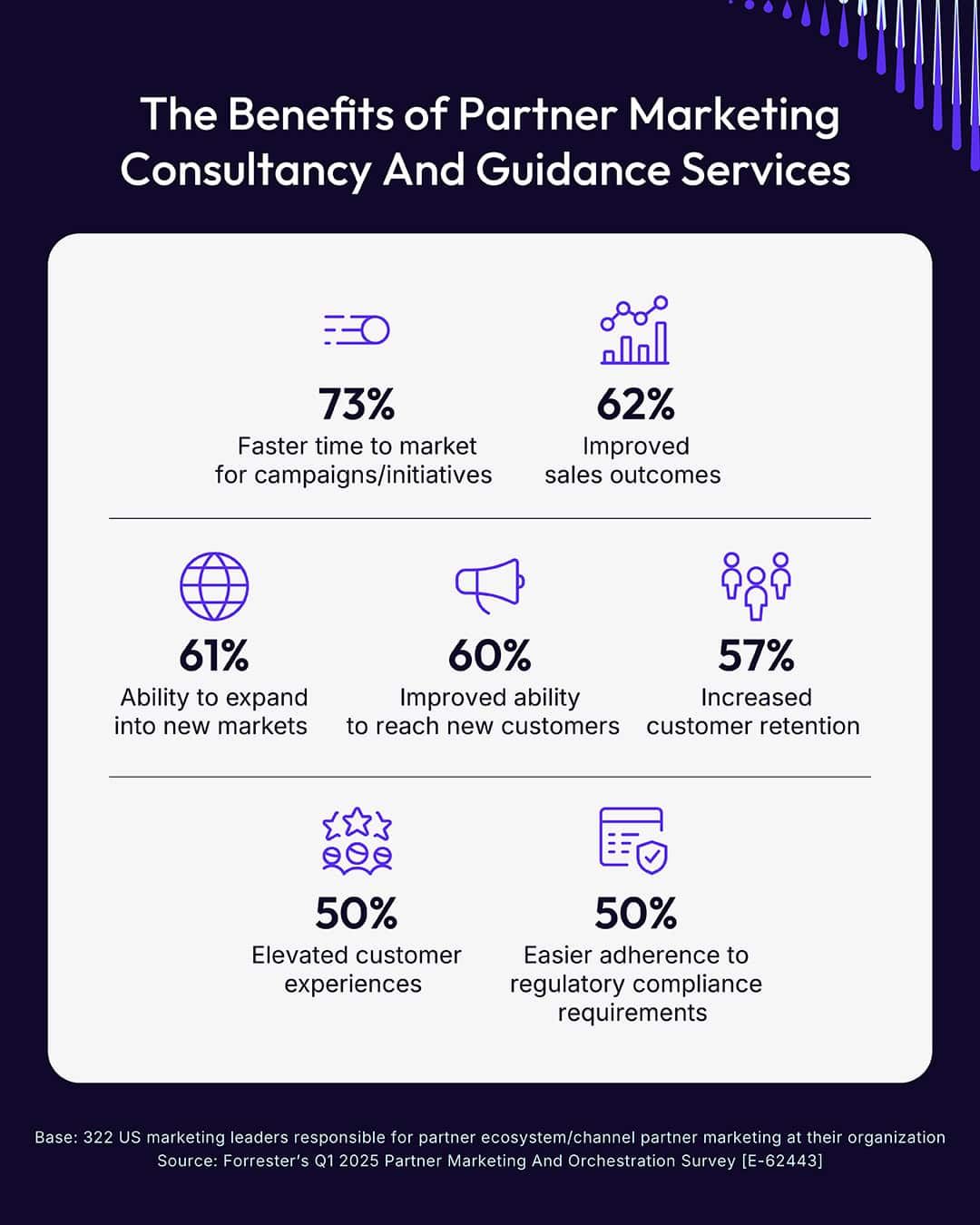
Seventy-five percent of marketers surveyed in the study conducted by Forrester Consulting indicated that an end-to-end solution provider that offers consultancy, guidance, and advice would be valuable or extremely valuable in improving the effectiveness of their partner marketing function.
Rethinking channel marketing investment
Unification is not just an operational decision. It’s a growth strategy.
A unified technology platform with an integrated services layer turns your brand-to-local ecosystem into a scalable growth engine, not just a budget line item. This platform serves as the single source of truth for partner and local performance and is a way for brands to move from reactive compliance to proactive risk management.
To get there, executives need to shift the evaluation lens:
- Prioritize end-to-end visibility over point-solution feature checklists
- Look at the total cost of orchestration – fees, internal effort, and lost opportunities – not just individual contract values
- Treat partners as an extension of your brand
The next step is not a feature-by-feature comparison. It’s a strategic opportunity to re-examine the cost of fragmentation in your organization and define what a unified, orchestrated future should deliver in terms of growth, risk reduction, and partner alignment.
Start with a clear-eyed assessment of your current ecosystem by asking your teams:
- How many tools and vendors are involved in our brand-to-local execution today?
- Where are we experiencing data loss, conflicting reports, or manual workloads?
- What is our co-op utilization rate?
- How much are we spending in aggregate on vendor fees and what value are we getting back?
- Are we looking at our needs holistically?
When brand and local partners are orchestrated around shared data, funding, and execution, they show up as a single, coherent presence in the market – meeting customers where they are with relevant experiences that actually convert. That is ultimately how unified brand-to-local ecosystems move from efficiency gains to durable, compounding revenue growth.