
For manufacturers navigating complex distribution networks, one challenge stands above the rest: getting channel partners to prioritize your products over the competition. Distributors juggle dozens of brands. Resellers face pressure to move whatever generates the highest margin with the least friction. And without a clear reason to champion your offerings, your products risk becoming just another SKU in an overcrowded catalog.
This is where channel incentive programs become essential. When designed strategically, these programs do more than reward sales — they align your entire channel ecosystem around shared outcomes, transforming passive partners into active advocates who drive measurable growth for your brand.
What are channel incentive programs?
Channel incentive programs are structured reward initiatives designed to motivate external partners — such as distributors, resellers, and value-added resellers (VARs) — to prioritize a manufacturer’s products or services.
These programs can include monetary rewards like rebates and bonuses, or non-monetary incentives such as training, recognition, and exclusive access to new products.
At their core, channel incentive programs aim to influence specific partner behaviors that align with manufacturer objectives. Whether it’s registering deals, selling targeted products, completing certifications, or launching co-branded campaigns, the right incentive strategy ensures you stay top-of-mind with partners who influence buying decisions.
The three-tier distinction
Understanding the layers within your channel is critical to program success:
- Channel incentive programs serve as the umbrella concept, encompassing all initiatives designed to motivate partners across your distribution network.
- Distributor incentive programs focus on mid-tier partners who purchase products in bulk and sell them to other businesses or retailers.
- Reseller and retailer incentives target partners at the edge of the channel who interact directly with end customers, often adding value through services or customization.
The key is orchestrating these layers together rather than running isolated promotions that compete or cannibalize each other. When distributors and resellers receive conflicting signals, confusion replaces motivation, and your program loses effectiveness.
What manufacturers gain from channel incentives
According to industry estimates, approximately 75% of all trade flows through channel partners. For manufacturers, this means channel incentive programs aren’t optional — they’re essential to capturing market share and driving revenue growth.
Well-executed programs deliver core outcomes, including increased sales, expanded market reach, greater share of wallet, and enhanced brand preference among partners. But the strategic benefits extend beyond these obvious wins:
- Better demand forecasting and inventory planning: Greater demand forecasting and planning emerge when channel data flows more freely. By incentivizing partners to share accurate demand forecasts and sales data, manufacturers can optimize production schedules, reduce stockouts, and prevent overstock situations.
- Improved partner experience and reduced churn: When programs make partners feel valued and supported, they’re more likely to stick around. High churn disrupts revenue continuity, increases onboarding costs, and weakens market coverage. Loyalty-focused incentive structures reduce churn by giving partners more reasons to stay engaged over the long haul.
- Enhanced competitive positioning: Incentive programs can differentiate you from competitors. In crowded markets where products are similar, the deciding factor for partners often comes down to which manufacturer offers better incentives and support.
Common gaps in distributor incentive programs today
Despite their potential, many distributor incentive programs fall short of their goals. Understanding these common pitfalls helps manufacturers design more effective initiatives:
- Over-reliance on discounts and rebates: Without behavior-based rewards, this creates a transactional relationship rather than a strategic partnership. While price incentives drive short-term volume, they don’t necessarily build the product knowledge, market development, or customer relationships that sustain long-term growth.
- Lack of alignment between manufacturer goals and distributor priorities: What matters to a distributor’s sales manager may differ significantly from what motivates counter staff or field reps. Programs that fail to account for these different audiences struggle to drive consistent behavior across the partner organization.
- Operational gaps: There are many types of operational gaps, including poor communication of program rules, opaque earning structures, manual claims processes, weak fraud controls, and limited analytics.
These friction points frustrate partners and reduce participation, ultimately limiting program ROI.
How to align incentives across the channel
The most successful manufacturers view channel incentives not as standalone programs but as integrated strategies that connect corporate objectives to field-level execution.
This requires a simple but powerful alignment framework:
- Manufacturer objectives: Are you launching a new product line? Expanding into new markets? Increasing share in existing accounts? Improving product mix toward higher-margin offerings? Each objective requires different partner behaviors.
- Target partner behaviors: Distributor principals need different incentives than sales teams, who need different incentives than counter staff. A one-size-fits-all approach dilutes impact.
- Incentive constructs: These should match the desired behavior. Rebates reward volume. Sales performance incentive funds (SPIFs) drive short-term focus on specific products. Market development funds (MDFs) support co-marketing. Loyalty programs build long-term relationships. Training incentives improve product knowledge.
- Measurement and feedback loops: Performance measurement closes the circle, allowing manufacturers to track what’s working and adjust accordingly. Without data-driven insights, programs drift away from their original objectives.

Designing a high-impact channel incentive program architecture
Moving beyond simple reward structures, sophisticated manufacturers build layered architectures that recognize partner diversity and motivate behavior at multiple levels.
Tiered structures
Tiered incentive structures acknowledge that partners operate at different maturity levels. A new distributor needs different support and incentives than a platinum-level partner with years of experience. Tiering creates clear pathways for advancement while reserving the most valuable rewards for top performers.
Push-pull strategies
With a push-pull strategy, you ensure you’re incentivizing both leadership (owners and managers who make strategic decisions) and front-line staff (sales reps and counter staff who interact with customers daily). When only leadership is incentivized, execution suffers. When only front-line staff receives rewards, strategic alignment weakens.
Simple earning structures with advanced mechanics
To strike the right balance, consider combining simple structures with advanced features. Partners should easily understand how to earn rewards, but the program can still support sophisticated features like multipliers for strategic products, accelerators for exceeding targets, and stackable promotions that reward multiple behaviors simultaneously.
Incentive mechanics: what and who to reward
Effective programs tailor incentives to specific audiences within the partner organization:
- Distributor principals and owners: Consider volume rebates, tier advancement bonuses, business planning support, and exclusive access to new products or markets.
- Sales teams: Drive results for SPIFs for closing deals on targeted products, deal registration bonuses, and performance-based rewards tied to quota attainment.
- Counter staff and field reps: Immediate rewards for product recommendations, training completion bonuses, and recognition programs maintain engagement.
- End-customer referrals: Some manufacturers extend incentives to partners who generate qualified leads or facilitate introductions to key accounts.
The mix of incentives should balance monetary and non-monetary rewards. Monetary incentives include rebates, discounts, bonuses, and SPIFs. Non-monetary incentives encompass training access, certifications, exclusive events, merchandise, and travel rewards.
Importantly, reward behaviors beyond pure sales. Certifications, data sharing, co-marketing participation, and pipeline visibility all contribute to channel success and deserve recognition.
Beyond rebates: experience-led rewards that build loyalty
While cash and rebates remain popular, experience-led rewards create emotional connections that foster long-term loyalty:
- Group travel incentives: Top-performing partners can earn trips to desirable destinations, combining recognition with relationship-building. These experiences create memories and peer networks that strengthen partner commitment to your brand.
- Experiential rewards: These include tickets to major sporting events, concerts, or exclusive industry gatherings. Experiential rewards provide unique value that partners can’t easily obtain elsewhere.
- Personalized reward catalogs: These incentives allow partners to choose from thousands of merchandise options, gift cards, or charitable donations, ensuring rewards resonate with individual preferences.
The key is right-sizing rewards to align award value with incremental impact while keeping unit economics sustainable. A $500 reward that drives $10,000 in incremental margin makes business sense. A $500 reward that generates $600 in sales does not.
Channel incentive program management: people, processes, and platforms
Channel incentive program management is an ongoing discipline, not a one-off campaign. Success requires attention to three critical areas.
Governance and cross-functional ownership
With strict governance and cross-functional ownership, you ensure alignment across sales, channel, marketing, finance, and legal teams. Each function brings necessary expertise — sales understands partner relationships, marketing drives communication, finance manages budgets, and legal ensures compliance.
Communication planning
It’s essential to address each role within the partner organization. Executives need strategic context. Distributor managers need program mechanics. Counter staff need simple, actionable information. End customers may need awareness of partner capabilities. Tailored messaging increases engagement across all audiences.
Fulfillment workflows
Fulfillment workflows handle the operational details that make or break the partner experience. This includes:
- Claim validation
- Approval processes
- Payout mechanisms
- Tax reporting
- Compliance documentation
Manual processes create delays and errors. Automated workflows improve speed and accuracy while reducing administrative burden.
Turning incentives into insight with data, analytics, and attribution
The most sophisticated manufacturers view channel incentive programs as rich sources of business intelligence. Here’s what you should be monitoring and why:
- Participation metrics reveal which partners engage with the program and which remain on the sidelines. Low participation signals communication gaps, unclear value propositions, or operational friction.
- Tier movement tracks partner progression through program levels, indicating whether the program successfully develops partner capabilities over time.
- Reward mix shows which incentives resonate most with different partner segments, informing future program design.
- Sales lift measures incremental revenue generated by the program, providing the foundation for ROI calculations.
- Product mix analysis reveals whether incentives successfully shift partner focus toward strategic offerings or higher-margin products.
- Market expansion data shows whether the program helps penetrate new geographies or customer segments.
Linking sell-in and sell-out data provides end-to-end visibility into product movement through the channel. Capturing activity beyond purchases — such as training completion, content engagement, and referrals — paints a complete picture of partner behavior.
Using pilots, tests, and segmentation allows manufacturers to iterate and improve program design over time. A/B testing different incentive structures, reward types, or communication approaches generates insights that optimize program performance.
Risk management: fraud, compliance, and channel conflict
As programs scale, risk management becomes increasingly important. Here are some of the main risks to look out for:
- Fraud risks: Claims submissions require mitigation through automated validation, transaction fingerprinting, and audit trails to prevent fraud. Common fraud scenarios include duplicate claims, inflated sales figures, and claims for ineligible products. Technology-enabled validation catches these issues before payouts occur.
- Legal and compliance considerations: Compliance standards vary across regions and must be planned for carefully. Rebate terms, contest rules, and tax treatment differ by jurisdiction. Programs operating internationally face additional complexity around data privacy, payment regulations, and local business practices.
- Channel conflict scenarios: Conflict can arise within your channel when competing incentives, territory overlap, or unclear rules create confusion or resentment among partners. Transparent program design, clear eligibility criteria, and consistent enforcement preserve partner trust and program integrity.
Change management: bringing distributors and resellers along
Even the best-designed programs fail without effective change management. But with the right program actions, you can ensure smooth distributor and reseller transitions:
- Phased pilots: These allow manufacturers to test program mechanics with a subset of partners before full rollout. This approach identifies operational issues, gathers partner feedback, and builds proof points that support broader adoption.
- Feedback loops: Create opportunities for partners to share their experience and suggest improvements. Regular surveys, advisory councils, and one-on-one conversations demonstrate that partner input matters.
- Iterative rollouts: Expand the program gradually, incorporating lessons learned at each stage. This reduces risk and allows the manufacturer to refine communication, processes, and technology before reaching the entire partner network.
- Internal sales enablement: Ensure that your sales team understands the program and can effectively communicate its value to partners with sales enablement. Sales reps serve as program ambassadors, and their enthusiasm (or lack thereof) significantly impacts partner adoption.
- Partner roadshows: Bring the program to life through in-person or virtual events that explain mechanics, demonstrate the platform, and celebrate early successes.
- In-portal onboarding: Partner onboarding provides guided experiences that help partners navigate the program platform, submit their first claim, and understand earning opportunities.
- Ongoing recognition communications: You can maintain momentum by highlighting top performers, sharing success stories, and reminding partners of available rewards.
Selecting the right channel incentive platform
Technology serves as the backbone of modern channel incentive programs, enabling automation, transparency, and scale. Here are the main features every channel incentive platform should have:
- Multi-program support: Allow manufacturers to run different incentive types within a single platform, reducing complexity and improving partner experience.
- Seamless claim capture: Claim capture accommodates various data sources, including invoices, point-of-sale files, and receipts. The easier you make it for partners to submit claims, the higher your participation rates will be.
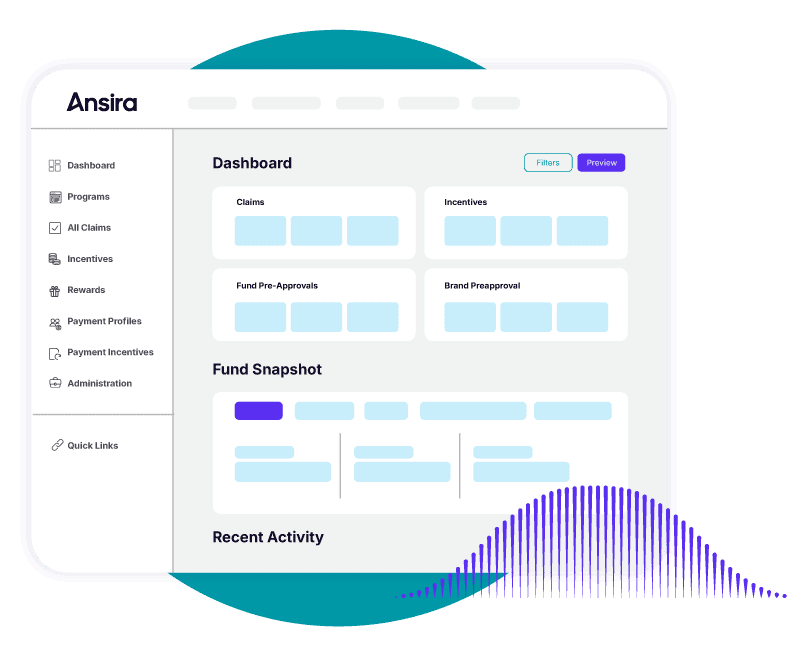
- Real-time dashboards: Real-time incentive dashboards provide visibility for both manufacturers and partners. Manufacturers track program performance and ROI. Partners monitor their progress toward rewards and tier advancement.
- Integrations: Integration capabilities with CRM, PRM, ERP, and marketing automation streamline channel incentive program management end-to-end. Data flows automatically between systems, eliminating manual data entry and ensuring consistency across platforms.
- Mobile accessibility: Meet your partners where they are, allowing them to check balances, submit claims, and redeem rewards from smartphones or tablets.
- Fraud detection: Protect program integrity through automated validation rules, duplicate detection, and anomaly identification.
Measuring ROI and making the business case internally
Securing budget and executive support requires demonstrating a clear return on investment.
A simple economic model estimates ROI by comparing the incremental margin from influenced sales against the total program and platform costs. For example, if a program costs $500,000 annually (including rewards, platform fees, and administration) and generates $5 million in incremental revenue at 20% margin, the program delivers $1 million in incremental margin — a 2:1 return.
Here are some ways you can measure ROI:
- Dashboards provide at-a-glance visibility into key metrics, including participation rates, sales lift, reward redemption, and program ROI.
- Cohort analyses compare performance between participating and non-participating partners, isolating the program’s impact from other market factors.
- Testimonials from top partners add qualitative evidence to quantitative results, demonstrating how the program strengthens relationships and drives partner satisfaction.
- Case-study narratives tell the story of specific partners who achieved breakthrough results through program participation, making the business case tangible and relatable.
Our work with Allied Air in manufacturing is a great example of a case study narrative. They achieved a 1000% return on investment, as measured by the Ansira Platform.
A 90-day roadmap for manufacturers
Launching a channel incentive program doesn’t require years of planning. A focused 90-day approach can get you to market quickly.
Weeks 1 – 3: Goal setting, partner insights, and data audit
Define clear objectives for the program. What specific behaviors do you want to drive? Which partner segments will you target? Conduct partner interviews to understand their motivations, challenges, and preferences. Audit available data sources to determine what sales information you can capture and how you’ll measure success.
Weeks 4 – 8: Program architecture, pilot design, and technology selection
Design the program structure with tiers, earning mechanics, and reward options. Develop pilot parameters to test the program with a subset of partners. Evaluate and select a technology platform that supports your requirements. Create communication materials and train your internal team.
Weeks 9 – 12: Launch, communications, and first optimization cycle
Roll out the pilot program to selected partners. Execute your communication plan, including launch announcements, training sessions, and ongoing reminders. Monitor early results closely, gathering both quantitative data and qualitative feedback. Make initial adjustments based on what you learn, then prepare for broader rollout.
Partner with Ansira for channel incentive program success
Building and managing effective channel incentive programs requires specialized expertise in program strategy, technology platforms, and ongoing optimization. Ansira brings decades of experience helping manufacturers design, launch, and manage programs that drive measurable results.
Our Ansira Incent platform provides the technology foundation you need, with support for multiple incentive types, automated claims processing, real-time analytics, and seamless integration with your existing systems. But technology alone isn’t enough — our team of channel marketing experts works alongside you to develop program strategies that align with your business objectives and resonate with your partners.
From initial program design through ongoing management and optimization, Ansira serves as your partner in building channel relationships that drive sustainable growth. Contact us today to learn how we can help you transform your channel incentive program from a cost center into a strategic growth driver.