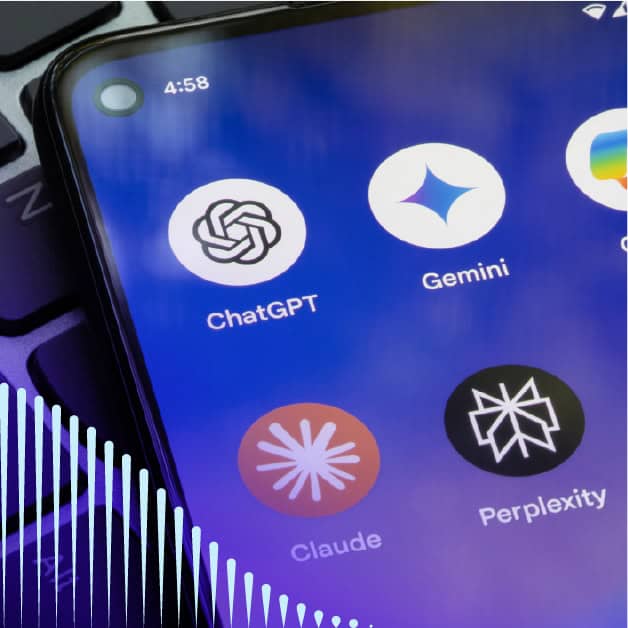
As AI reshapes the search engine response page (SERP), more users are getting what they need directly from AI Overviews, Maps, Google Business Profile (GBP) listings, and other search features before they ever visit a brand or partner’s site. While traditional search is still highly relevant, how we measure search performance needs to evolve alongside the generative search experience. This increase in zero-click searches will force marketers to rethink how they define search success and require marketing strategists to think beyond just clicks.
The opportunity here is not to declare traditional SEO dead. Users still search, brands still need to rank, and website traffic still matters. Rather, now is the time to recognize that visibility, engagement, and action are increasingly distributed across the search experience rather than concentrated on the website alone.
Zero-click search is not new, but AI is accelerating it
Zero-click search happens when a user completes their task directly on the search results page without clicking through to a website. That behavior has existed for years through featured snippets, local packs, knowledge panels, and instant answers. AI is making that experience more seamless and user-friendly, driving a rapid shift in consumer search behavior.
Third-party data shows us just how rapidly this change is occurring. As of February 2026, BrightEdge reports nearly half of all Google searches result in an AI Overview, up from 31% the year before. How often these and other searches result in zero clicks varies by methodology, from as low as 22% to as high as 65%.
This data speaks to a fundamental shift in how search engines are serving users. Instead of simply pointing people toward websites, search engines are increasingly answering questions, surfacing local details, and helping users take action directly inside the SERP. On Google, that means Maps and YouTube feature prominently. On ChatGPT, Claude, and others, users ask direct questions and get direct answers. For brands, visibility is still there — but more search value is being captured in-SERP, instead of resulting in an organic click.
AI search is shifting where brand interactions happen
The practical implication is straightforward: Fewer clicks do not automatically mean less visibility.
In an AI-shaped search environment, users may still discover a brand, gather information, compare options, and move closer to conversion without ever landing on the website. For local and multi-location brands in particular, a search result can now function as a destination in its own right. Hours, phone numbers, reviews, menus, directions, location imagery, and AI-generated summaries often answer the immediate need before a site visit becomes necessary.
That does not make the website irrelevant. It makes the search ecosystem broader. The website remains central for deeper education, conversion, and owned-brand storytelling, but it is no longer the only place where search performance shows up.
What users are doing instead of clicking
One of the most important strategic shifts in AI search is understanding the kinds of actions that now matter.
For local and branded queries, users are often:
- Viewing Maps results
- Requesting directions
- Checking phone numbers
- Reviewing menus or location details
- Using AI-generated summaries to answer questions quickly
These are not low-value interactions. In many cases, they are higher-intent than a casual site visit. A direction request can be a stronger business signal than a homepage session. A menu view or location lookup can represent clear purchase or visit intent. A phone call from GBP may be closer to conversion than many traditional organic visits.
That is why AI search is not just changing traffic patterns. It is changing which signals should matter most.
Marketers need a broader definition of search success
The traditional search model still works, but it no longer tells the whole story: Historical search goals must evolve due to Google evolutions, changing search behavior, and AI, and clicks alone are not representative of success. Combined organic actions provide a better way to understand trendlines, seasonality, and real search impact.
That broader view is increasingly necessary. If a brand appears in AI Overviews, dominates local pack visibility, drives direction requests through GBP, and answers the user’s question before a click happens, search is still working. It is just working differently.
The job for SEO and AEO teams is no longer just to maximize blue-link traffic. It is to maximize discoverability, answer ownership, entity completeness, and action potential across the full search surface. Seer Interactive put it succinctly in their 2026 AI Overview CTR Study: “Brand reach is happening off-property.”
The KPI set needs to change with zero-click searches
If user behavior is changing, reporting needs to change with it. More specifically, brands should consider building KPI frameworks around two categories:
Outcome metrics
Outcome metrics help quantify what users actually did after finding the brand in search. These may include:
- Organic clicks to site
- Google Business Profile actions
- Direction requests
- Calls from local search surfaces
- Menu views or location-detail engagement
- Downstream conversion actions tied to branded or local search
Presence metrics
Presence metrics help quantify whether the brand is visible in the environments where zero-click search behavior is increasing. These may include:
- AI Overview citation rate
- Cited page coverage
- Local pack top-3 share
- Branded query visibility across classic organic, Maps, and AI surfaces
- Entity completeness across locations, services, and product information
- Answer ownership for high-intent questions
Together, those metrics provide a more useful picture than clicks alone. Importantly, set benchmarks now to measure progress over time. Brands that have already taken this step will be able to adjust their strategy ahead of their competition.
Winning in AI search will look different
The brands that perform best in this environment will be the ones that adapt their content and measurement strategies to match the new behavior.
AI search rewards brands that are easy to understand, easy to cite, and easy to act on.
Final takeaway
AI is not making traditional search irrelevant. It is changing how search value is distributed.
Users still search. Brands still need visibility. Websites still matter. But more of the search journey now happens inside AI Overviews, Maps, Google Business Profile listings, and other SERP features before a website click ever occurs.
That means marketers need to stop treating website traffic as the only proof of search success. The more useful question now is not simply how many clicks search drove. It is how often search helped the user find the brand, get an answer, and take an action that mattered.